How Tire Recycling Works in Idaho
You hand over your old tires for disposal. They get loaded on a truck and driven away. But then what? Do they just pile up somewhere?
Actually, most tires collected in Idaho get recycled into useful products. Here's what happens to your old tires after pickup.
Why Tires Can't Be Landfilled
Idaho law prohibits putting whole tires in landfills. Here's why:
Tires don't compress. Their shape traps air, taking up space that could be used for other waste. They also tend to work their way back to the surface over time.
Fire risk. Underground tire fires are extremely difficult to extinguish and can burn for years, releasing toxic fumes and contaminating groundwater.
Valuable materials. Tires contain rubber, steel, and fiber that can be recovered and reused. Landfilling wastes these resources.
Better alternatives exist. Modern tire recycling technology makes landfilling unnecessary for most tires.
The Tire Recycling Process
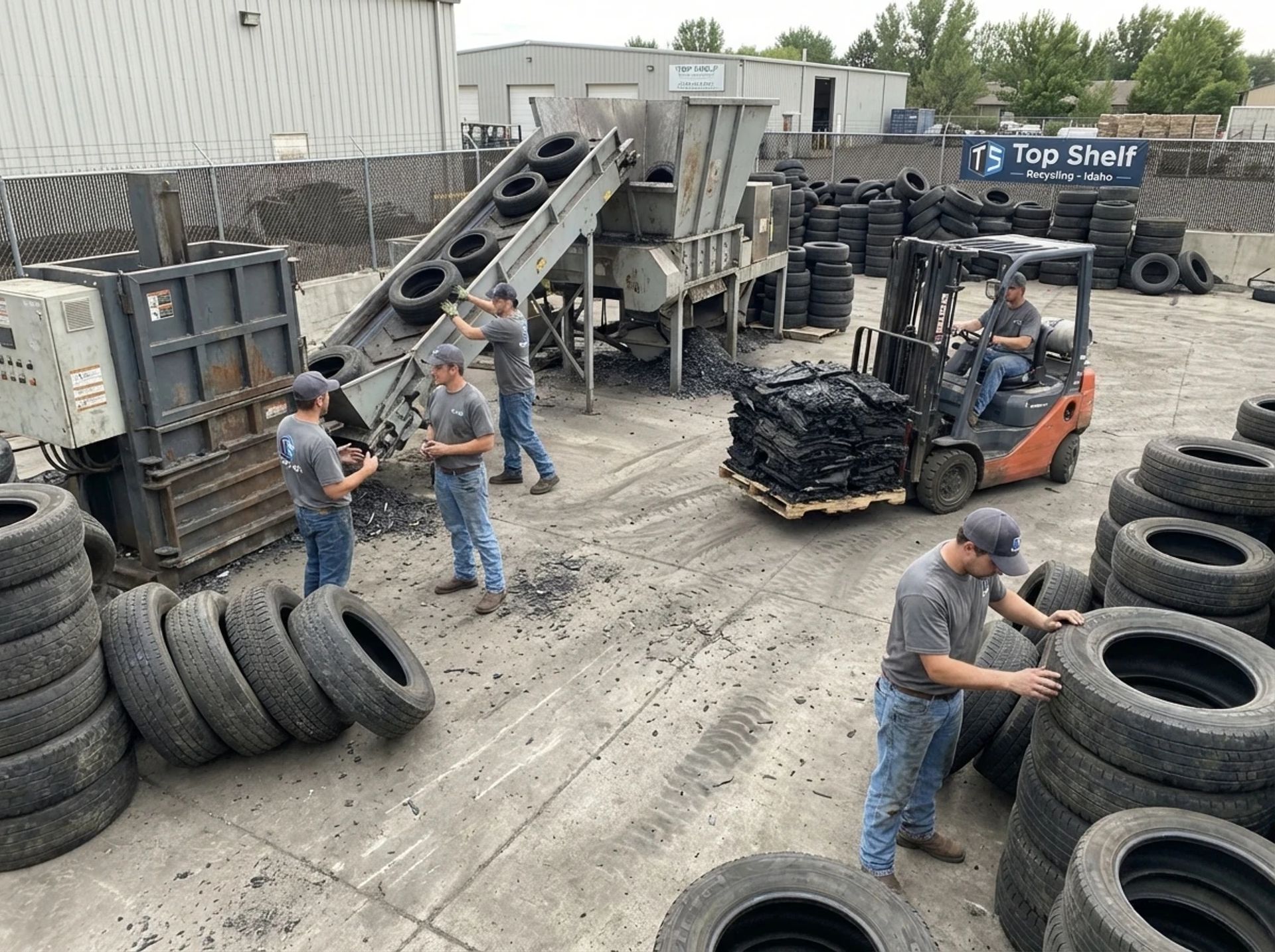
What happens at a tire recycling facility:
The result: about 85% of the tire gets turned into reusable material.
What Recycled Tires Become
Old tires get new life in surprising applications:
Rubberized asphalt. Ground rubber mixed into road paving material makes quieter, longer-lasting roads. You've probably driven on roads containing recycled tires.
Playground surfaces. The springy rubber mulch on playgrounds is often made from recycled tires. It provides cushioning to prevent injuries.
Athletic surfaces. Running tracks, sports fields with artificial turf, and gym flooring often incorporate tire rubber.
Tire-derived fuel. Cement kilns and paper mills burn processed tires as fuel. Tires have energy content comparable to coal but generate less pollution.
Landscaping products. Rubber mulch for gardens and landscaping lasts longer than wood mulch and doesn't attract termites.
Construction materials. Tire rubber goes into railroad crossings, dock bumpers, roof coatings, and various industrial products.
Tire Recycling in Idaho
How Idaho handles tire recycling:
Collection and transport. Tires collected in the Boise area typically get consolidated at local facilities before being shipped to regional processors.
Processing facilities. The Northwest has several tire recycling plants that handle material from Idaho. Some shredded material goes to tire-derived fuel users in the region.
DEQ oversight. The Idaho Department of Environmental Quality regulates tire disposal and recycling. Licensed haulers must document proper disposal of collected tires.
Disposal fees fund the system. The fees you pay for tire disposal help support the collection and recycling infrastructure.
What Can't Easily Be Recycled
Some tires present recycling challenges:
Large off-the-road (OTR) tires. Mining and heavy equipment tires are difficult to process due to their size. They often end up being used whole for engineering applications or cut for specific uses.
Contaminated tires. Tires filled with dirt, water, or debris are harder to process. This is one reason keeping stored tires clean and dry matters.
Tires on rims. Rims must be removed before tire recycling. Some facilities won't accept tires still mounted on wheels.
The Bottom Line
When you dispose of tires properly in the Boise area, most of the material gets recycled into useful products—roads, playgrounds, fuel, and more. Very little actually goes to waste.
The disposal fees you pay support this recycling infrastructure. It's a much better outcome than tires piling up in illegal dumps or sitting in your backyard.
So when you pay that small disposal fee, you're not just getting rid of a tire—you're funding a system that turns waste into roads, playgrounds, and useful products across the region.
Need Tire Removal?
We make sure your tires go to licensed recycling facilities. Serving Boise, Meridian, Nampa, and the Treasure Valley.
Call (208) 314-3279