Bulk Tire Disposal Boise: Prepping a Pile That's Sat for Years
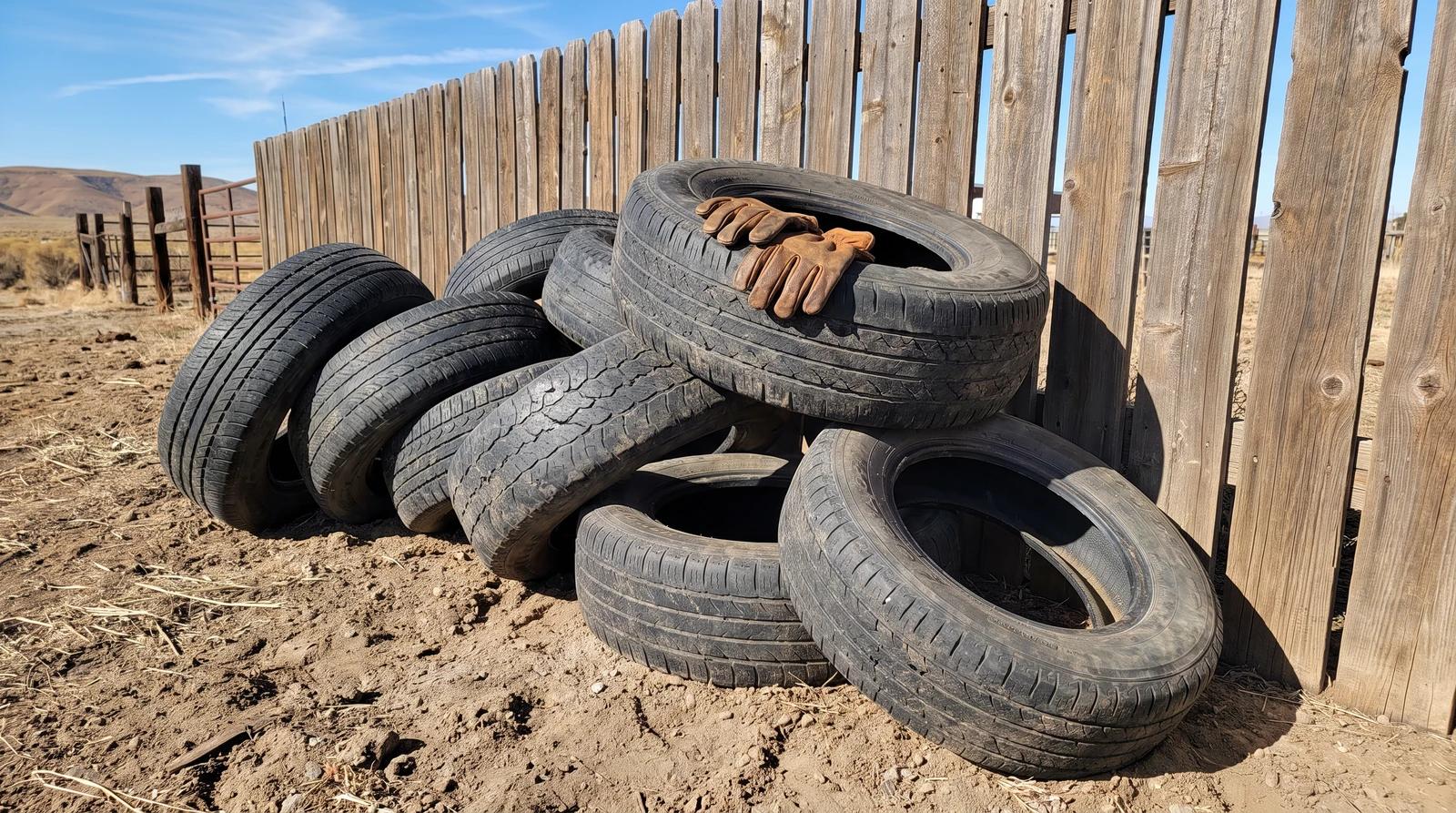
Old tire piles out on rural properties are often bigger than the owner thinks. Some of the tires have sunk into the dirt, and it's not unusual to find sagebrush growing right up through the middle.
That's pretty normal, honestly. If you're looking into bulk tire disposal in Boise for a pile that's been sitting for years, it's a different job than a fresh stack off the back of a shop. Here's what an old pile really involves, and what's worth doing (or not) before we show up.
Why an old pile isn't the same job
Tires that came off a car last month are easy. They're clean, they're light, and they come apart without a fight.
Tires that have sat through a few Treasure Valley summers and winters are another story. They hold water. They freeze together in January. The sun bakes the sidewalls until chunks crack off in your hands.
Then there's the bottom row. Dust blows in, weeds grow up around it, and after enough years it's basically part of the yard.
None of that makes the job hard to pull off. It just takes longer than a quick count would suggest, which is why we always look at the pile in person before we give you a price.
Water, ice and whatever moved in
This is the part nobody thinks about until they flip the first tire.
Old tires hang onto water. A big truck tire can hold more than you'd guess, and in July that water is a mosquito nursery. Tip one over in the middle of summer and you can walk straight into a cloud of them.
In winter the same water turns to ice. A frozen tire weighs a lot more, and when a few are iced together you aren't lifting them. You're prying them apart.
And then there's whatever moved in. Mice love a tire pile. So do snakes and black widows, and on bigger rural properties the odd raccoon isn't unheard of. We're not telling you that to scare you off. It's just why we wear gloves and take our time.
Heads up: Don't start dumping water out of a big pile yourself the week before pickup. You'll stir up whatever's living in there, and you'll turn the ground around the pile into mud, which makes loading slower. Unless the tires are right up against your house, leave them for us.
Getting ready for tire disposal in Boise
So what should you do before we come out? Not much.
The most useful thing is clearing a way in. On old piles, the slow part usually isn't the tires. It's getting to them. If there's a gate that's been wired shut for years, a fence panel lying in the weeds, or a patch of tall dry grass, opening that up ahead of time saves real time.
If some of the tires are still on rims, mention it when you call. Old piles almost always have a mix, and you don't need to sort them. We just like to know what we're walking into.
Same goes for anything else hiding in there. Piles like this turn into catch-alls, and it's common to find buckets, scrap metal, broken lawn chairs and the occasional car battery. Batteries and chemicals get handled separately, so a heads-up helps.
And please don't spend a Saturday counting every tire. A rough idea is plenty. We'll see the pile during the free estimate, and the price comes from what's really there and the work it takes, not a guess over the phone. You get a firm number before we touch anything, and no surprise fees after.
What bulk tire disposal day looks like
Once you're good with the price, we pick a day. Sometimes we can do it same day. For bigger rural piles, we'll set a day that works for you.
We start at the top and work down. Dry tires come off first. Waterlogged ones get drained well away from your house and any well. The buried bottom row comes out last, and that's almost always the slowest part.
A medium pile in a side yard in Meridian goes a lot faster than a pile that's been growing on a few acres in Eagle or Emmett for years. Access, how many tires are buried, and how much water and ice they're holding all change how long it takes. We'll tell you which kind you've got before we start.
Where does it all go? Tires that still have life in them get set aside when we can, and the rest go to recycling instead of sitting in a landfill. That matters, because a tire buried today is still a tire decades from now.
Should you just haul them yourself?
Yes, we'd love the work. But if you've got twenty clean car tires and a pickup, you can probably handle that on your own. Just call wherever you're taking them first, since tire rules and fees vary from place to place.
An old pile is where it starts making sense to hand it off. It's the digging, the standing water, the critters and the weight all at once. Plenty of folks, from the Boise Bench out to Canyon County, mean to deal with a pile like this for years and never want to be the one to start.
There's also fire to think about. Dry Idaho summers and a big pile of rubber don't mix well, and once tires catch, they're awful to put out.
The bottom line
An old tire pile is heavier, wetter and messier than it looks from the porch. Open up a way in, mention any rims or random junk, and let someone who's dug out a lot of these do the rest.
If that pile has been on your list for a while, give us a call at (208) 314-3279. We'll come take a look, give you a firm price, and you can decide from there. Cash, card and Venmo all work.
Need Bulk Tire Removal?
We provide commercial tire removal throughout Boise, Meridian, Nampa, Caldwell, and the surrounding Treasure Valley. Free site assessments and quotes.
Call (208) 314-3279More From Our Blog
Farm Tire Disposal in Boise: Old Center Pivot Irrigation Tires
Swapping worn tires on your center pivot? Here's how farm tire disposal in Boise and the Treasure Valley works for pivot tires, with or without the wheels.
Tire Disposal Boise: Sorting Sizes for Commercial Tire Removal
Run a shop or fleet yard? Here's why sorting tires by size before pickup makes commercial tire removal and tire disposal in Boise easier to plan and price.
Old Tire Removal and Tire Disposal in Boise: Safe Storage
Old tires piled by the fence until you deal with them? Here's how to store them safely before tire disposal in Boise, and mistakes to avoid while they sit.
