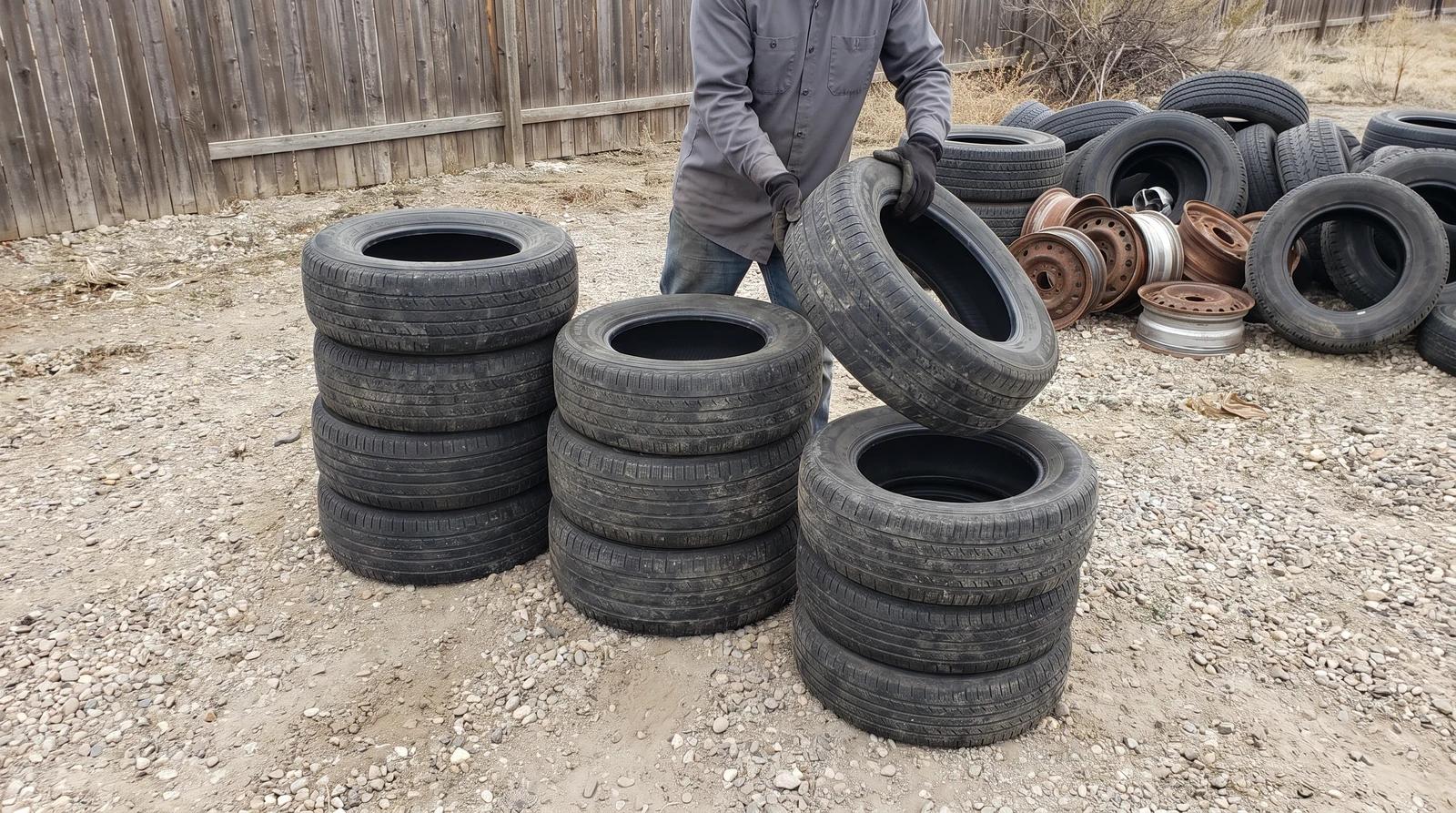
Tire Disposal Boise: Sorting Sizes for Commercial Tire Removal
Walk behind most shops or fleet yards around the Treasure Valley and you'll see the same thing. Passenger tires, light truck tires and a few heavy truck casings all end up in one big pile. If you're planning commercial tire removal in Boise, a little sorting before pickup makes tire disposal in Boise simpler, and it helps you understand what you're paying for.
This isn't about making extra work for you. It's about knowing what's in the pile, because size and type change how tires get handled once they leave your lot.
Why tire size matters for commercial tire disposal in Boise
Tires don't all go down the same path after pickup.
A standard passenger tire is light, stacks easily and is widely accepted for recycling. Light truck tires are a step up in weight and bulk.
Heavy truck tires and equipment tires are a different animal. They take more muscle to move, eat up more room on a load, and often go to different processors than car tires do.
So when everything's tangled together, two things happen. The crew spends time sorting on your property, and it's harder for anyone, you included, to tell what the pile really holds.
That's why we price by the space and the work involved. A pile of mostly passenger tires next to an open gate is a very different job from the same footprint full of heavy casings stuck behind a fence.
The rough sizes worth separating
You don't need a tape measure or a spreadsheet. A few rough groups cover most commercial piles.
Passenger tires come off cars, small SUVs and minivans. For a typical auto repair or tire shop, these make up most of the pile.
Light truck tires come off pickups, bigger SUVs and work vans. They're taller and heavier, with thicker sidewalls. If your shop in Meridian or Nampa works on a lot of contractor rigs, you've probably got a stack of these.
Heavy truck and trailer tires are the big ones. If you run a fleet yard or service work trucks in Canyon County, you already know how much harder these are to move by hand.
Equipment and ag tires come off loaders, tractors and other machinery. Farms out around Kuna, Star and Middleton tend to collect these over the years, and they often need special handling.
Should you split out every single tire? No. Rough piles are plenty. Even just rolling the big stuff off to one side helps.
Tip: Keep tires that are still mounted on rims in their own stack. Tires on rims usually go through a different process than loose ones, so mixing them in with bare tires slows down the pickup and can change the price.
What else to check before commercial tire removal in Boise
Size isn't the only thing that changes how a pickup goes. A few other details are worth a quick look.
Water and mud. Tires stored outside pick up rain, snowmelt and dirt. Water inside a tire adds weight and makes a mess when it's moved. When it sits there through a hot, dry Boise summer, it can breed mosquitoes too. Tipping tires on their sides or keeping them covered helps a lot.
Debris mixed in. Commercial piles tend to collect rags, oil filters, scrap metal and broken pallets. Tire recyclers want tires, not trash. Pull that stuff out ahead of time and the load stays clean.
Access. Can a crew walk straight up to the pile? Or is it behind a locked gate, stacked against a building, or buried under snow in January? Easy access means less time on site. A tight alley lot in the North End and a wide-open gravel yard in Caldwell aren't the same job, even with the same tire count.
Frozen tires. In winter, the tires at the bottom of a pile can freeze to the ground or to each other. That's not a dealbreaker. It's just good to know before you book a cold-morning pickup.
Hauling them yourself vs. calling a tire disposal crew
Honestly, if you've only got a handful of passenger tires, you might be fine taking them in yourself.
Ada County's landfill and some other county sites take tires, but they charge a fee and have their own rules. Check current hours and policies before you load up. Some tire retailers will also take your old tires when you buy new ones.
Where DIY falls apart is volume. A shop that's been stacking tires for a few months has a real load on its hands. Idaho also has rules about how waste tires are stored, hauled and disposed of, and you're still responsible for where yours end up.
Hauling a big commercial load in pieces eats up your staff's time. That's where a crew earns its keep. A good one will come out, look at the pile, give you a firm price before anything's touched, and haul it away. Ask where the tires go afterward, because a lot of them can be recycled instead of just ending up somewhere else.
A cleaner pile makes for an easier pickup
You don't have to sort every tire by hand. Separate the big ones, pull the rims aside, dump out the water and clear out the junk. Do that much and any commercial tire removal in Boise goes smoother, and the estimate makes more sense when you get it.
If you'd like someone to come take a look, give Boise Tire Removal a call at (208) 314-3279. The estimate's free, the price is set before we start, and there are no hidden fees. Same-day service is there when it's available, and we take cash, card and Venmo. No pressure either way.
Need Bulk Tire Removal?
We provide commercial tire removal throughout Boise, Meridian, Nampa, Caldwell, and the surrounding Treasure Valley. Free site assessments and quotes.
Call (208) 314-3279More From Our Blog
Farm Tire Disposal in Boise: Old Center Pivot Irrigation Tires
Swapping worn tires on your center pivot? Here's how farm tire disposal in Boise and the Treasure Valley works for pivot tires, with or without the wheels.
Old Tire Removal and Tire Disposal in Boise: Safe Storage
Old tires piled by the fence until you deal with them? Here's how to store them safely before tire disposal in Boise, and mistakes to avoid while they sit.
Farm Tire Disposal Boise: Clearing Out Old Silage Pile Tires
Done using tires to hold down silage tarps? Here's how tire disposal works in Boise and the Treasure Valley for old bunker tires, mud, water and all.
