Farm Tire Disposal Boise: Clearing Out Old Silage Pile Tires
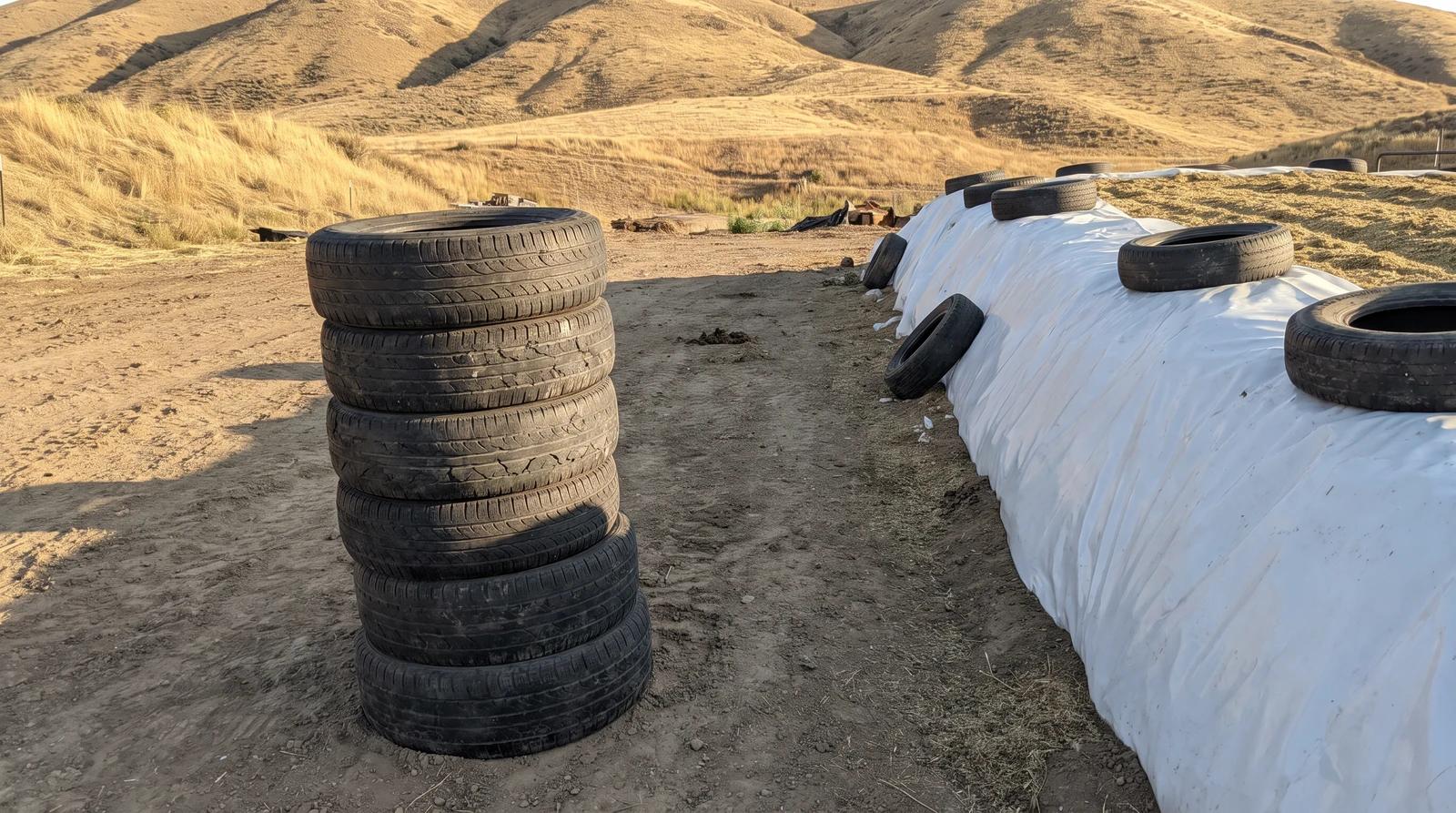
Every fall, somewhere between Kuna and Emmett, someone is pulling plastic over a fresh silage pile and tossing tires on top of it one at a time. It works, and it's also how a lot of farms end up with a pile of tires nobody really meant to own. Sooner or later, that turns into a call to us about farm tire disposal in Boise and the rest of the Treasure Valley.
These aren't clean takeoffs from a tire shop. They're cut, cracked, full of water and half buried in old feed.
Here's what we've learned from hauling them out of farm yards from Middleton to Kuna.
Why silage tire disposal in Boise is its own kind of job
A tire that's spent season after season on a bunker isn't the tire it was when it went up there.
The sun cooks the rubber. Hot, dry Canyon County summers crack the sidewalls, and freezing winters split those cracks wider. Plenty of them had the sidewall cut out on purpose so they'd lie flat, and some are down to a bead ring and a strip of tread.
Then there's what's inside. Rainwater, snowmelt, fermented feed, mud and now and then a mouse or two.
Standing water in old tires is also where mosquitoes like to breed. A pile of them sitting near the house or the barn all summer isn't a great neighbor.
None of that makes them hard to get rid of. They just take more handling than a stack of car tires out of somebody's garage in Garden City.
Can silage tires even be recycled?
Mostly, yes. Their condition is what matters.
Clean, whole tires are the easiest. Tires caked in dirt and old silage, or still full of water, need to be dumped out and knocked reasonably clean before they go anywhere. Nobody wants to haul mud, and a tire frozen solid with ice is heavy and miserable for everyone involved.
Sidewall-cut tires and loose tread strips can usually still be recycled. They just stack funny and eat up more room on the load.
A solid tire with decent tread left can sometimes go to someone who'll use it again. We donate or recycle as much as we can and keep as little as possible out of the landfill.
So the real question isn't whether they can be taken. It's how much prep happens first, and who does it.
Doing the prep yourself, or letting us handle it
Yes, we'd happily take the whole job. But honestly, if you've got a loader and a free afternoon, you can do some of the work yourself and save a bit.
Tipping the tires to drain them and pushing them into one spot near a gate makes pickup a lot faster.
That said, pulling silage tires is wet, heavy, smelly work. Most people who've done it once don't want to do it again.
If yours are still spread across a bunker, still holding water or tangled up in old plastic, that's fine. We'll pull them, drain them and load them, and that work just goes into the estimate.
Pricing is based on the volume and the work involved, not a flat rate per tire. A pile of drained tires by a gate is a very different job from the same number scattered across several bunkers out past Meridian.
Tip: If you're switching to gravel bags or another cover, plan the cleanup for right after the pile is fed out. The tires are already off the plastic, the bunker's empty and nobody's working around a fresh cover.
When to schedule farm tire disposal around Boise
Timing matters more than most people expect.
Late winter and early spring are usually the sweet spot. Last fall's silage is getting fed down, the tires are coming off anyway and field work hasn't started yet.
The catch is mud. A soggy March yard near Caldwell or Nampa can keep anyone from getting close to the pile, so sometimes it's worth waiting for the ground to firm up.
Summer works too, with one warning. Tires that have baked in the heat with water sitting in them are about as unpleasant as this job gets. Draining them ahead of pickup helps a lot.
The worst time? Right before chopping. Everybody's busy, nobody wants a crew in the way and those tires are about to go back on a new pile anyway.
How long a farm tire job takes on site depends on how many tires there are, how spread out they are, whether they've been drained and how easy it is to get a truck close. Smaller loads can sometimes happen the same day you call, but on a large place we'd rather work around your calendar than squeeze it in.
What slows a job down
Old plastic is the big one. Silage cover wrapped around and under the tires has to be pulled apart from them, and it doesn't get recycled with the rubber.
Tires that have grown into the ground come next. If a pile has sat in one spot for years, the bottom row may be half sunk and full of roots. They still come out, it just takes some digging.
Mixed loads are the last one. If you've got old implement tires, truck tires or a few still on rims mixed in, mention it at the estimate so we can plan for them on the same trip.
Bottom line
Silage tires did their job. Once you're done with them, they're mostly water traps and clutter.
If you're out near Emmett, Star, Kuna or anywhere else in the Treasure Valley with a bunker's worth of tires you're ready to see gone, we'll come take a look and tell you exactly what it'll cost. No pressure either way. Just give us a call at (208) 314-3279 and we'll find a time to walk it with you.
Need Bulk Tire Removal?
We provide commercial tire removal throughout Boise, Meridian, Nampa, Caldwell, and the surrounding Treasure Valley. Free site assessments and quotes.
Call (208) 314-3279More From Our Blog
Farm Tire Disposal in Boise: Old Center Pivot Irrigation Tires
Swapping worn tires on your center pivot? Here's how farm tire disposal in Boise and the Treasure Valley works for pivot tires, with or without the wheels.
Tire Disposal Boise: Sorting Sizes for Commercial Tire Removal
Run a shop or fleet yard? Here's why sorting tires by size before pickup makes commercial tire removal and tire disposal in Boise easier to plan and price.
Old Tire Removal and Tire Disposal in Boise: Safe Storage
Old tires piled by the fence until you deal with them? Here's how to store them safely before tire disposal in Boise, and mistakes to avoid while they sit.
