Tractor and Farm Tire Disposal in Boise, Idaho: Liquid Ballast
Tire disposal in Boise is usually pretty simple. Somebody's got a stack of old car tires in the garage, we load them, and we're on our way. Farm tires are a different story.
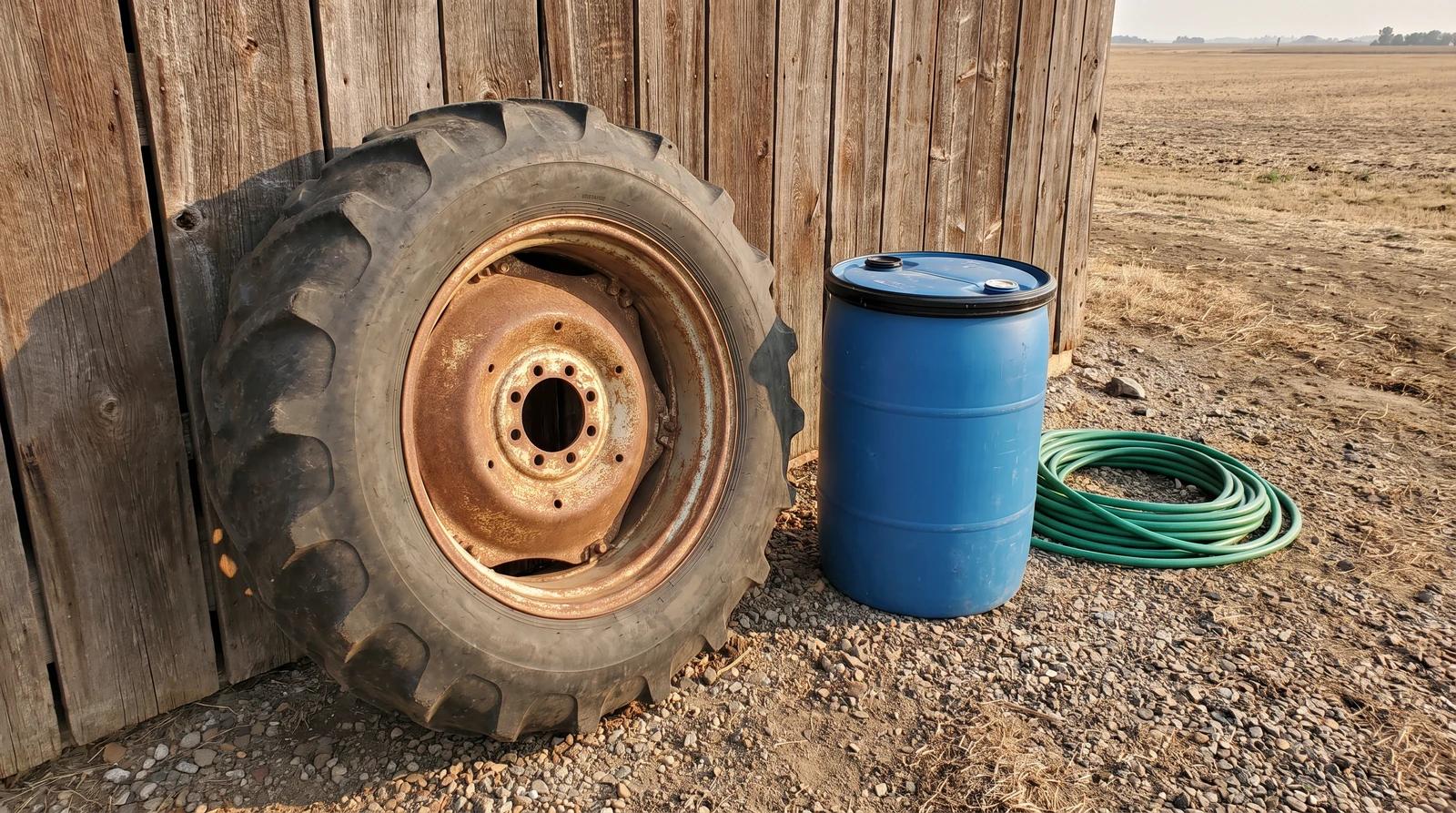
A pair of old rear tractor tires can look like any other worn-out ag tires leaning against a wall. Then two people try to tip one over. It barely moves, and it sloshes.
That's the part of tractor and farm tire disposal in Idaho nobody warns you about. A lot of rear tractor tires got filled with liquid ballast years ago, and that liquid is still in there when the tire's finally done.
If you've got one of these sitting behind the barn, here's what you're dealing with and how to get rid of it without making a mess.
Why some farm tires are full of liquid
Farmers add weight to the rear tires for traction and stability, especially with a loader on the front. Instead of bolting cast iron weights to the wheels, plenty of people just fill the tire partway with liquid.
Older tires often have a calcium chloride and water mix in them. It's heavy, it won't freeze in an Idaho winter, and it's rough on steel. Newer setups might use a beet-based product or something closer to washer fluid. Some folks have no clue what's in theirs because the tractor came that way.
So why does it matter? A filled rear tire weighs a lot more than the same tire empty, and the bigger the tire and the more liquid in it, the heavier it gets. You can't just roll it up onto a trailer, and you really don't want it falling over onto somebody's foot.
How to tell if yours has fluid in it
Start with the valve stem. Ballasted tires usually have a bigger, heavier stem built for both air and water. Rotate the stem to the bottom, press the core, and if liquid comes out instead of air, there's your answer.
Or just try to rock it. An empty tractor tire is awkward but you can move it. A filled one feels like it's bolted to the ground, and you'll hear it shift inside.
Rust tells a story too. That crusty white or orange buildup around the valve or the bead is often calcium chloride that's been weeping out for years.
Heads up: Don't pull the valve core and let a calcium chloride tire drain onto your yard, your gravel drive or anywhere near a well. That stuff is salt. It kills grass, eats metal and doesn't wash away quickly. If you're not sure what's in the tire, leave it sealed until someone's had a look.
Tire disposal in Boise when the tire is still full
Here's how a job like this usually goes for us.
We come out for a free estimate, look at the tires, and figure out what's in them and whether they're still on the rims. You get a firm price before we touch anything. It's based on the work involved, and there are no hidden fees tacked on once the truck's loaded.
If a tire needs draining, we do it right there with the valve at the bottom and the liquid going into containers, not onto the ground. It's slow. A big rear tire drains at its own pace, and the last bit usually needs some air pushed in to clear it. Draining can easily take longer than loading.
Once it's empty, it's just a big tire. We break it off the rim if needed and haul it off to be recycled. Steel rims get recycled separately, and the fluid gets handled based on what it actually is.
Can we take one that's still full? Sometimes, if it's a smaller tire and we brought the right equipment. Most of the time, though, draining first is safer for everybody.
Doing it yourself vs. calling for tire disposal in Boise
Yes, we'd love the job. But honestly, if you've got one small front tire with fluid in it and a proper way to catch and get rid of the liquid, you can probably handle that one.
The big rears are where people get into trouble. A half-drained tire is top-heavy and shifts on you. Breaking the bead on a large ag tire with rusted rims takes real tools. And when you're done, you've still got a slimy tire and a few drums of salty water that most places won't just take off your hands.
It's common for someone to start draining a tire, get halfway and quit. That's fine. We'd just rather hear from you before the fluid's all over the shop floor.
When it makes sense to get it done
Late fall and early spring are the busy times. After harvest you finally have a minute to walk the property, and in spring everybody's cleaning up before the season gets going.
Summer works too. Warm weather actually makes draining easier. In a hard January freeze the beet-based fluids get thick and sluggish, and while calcium chloride keeps flowing, nobody enjoys standing in the wind waiting on it.
Whatever the season, we cover the whole valley, from farm ground in Nampa and Caldwell to acreage in Eagle and the edges of Meridian.
The bottom line
If your old tractor tire won't budge, it's probably full of liquid. Don't drain it on the ground, and don't try to wrestle a full rear tire onto a trailer by yourself. Drain it properly, pull the rim and get the tire recycled.
If you'd rather skip all that, give us a call at (208) 314-3279. We'll come take a look, tell you exactly what it'll cost and go from there.
Need Bulk Tire Removal?
We provide commercial tire removal throughout Boise, Meridian, Nampa, Caldwell, and the surrounding Treasure Valley. Free site assessments and quotes.
Call (208) 314-3279More From Our Blog
Farm Tire Disposal in Boise: Old Center Pivot Irrigation Tires
Swapping worn tires on your center pivot? Here's how farm tire disposal in Boise and the Treasure Valley works for pivot tires, with or without the wheels.
Tire Disposal Boise: Sorting Sizes for Commercial Tire Removal
Run a shop or fleet yard? Here's why sorting tires by size before pickup makes commercial tire removal and tire disposal in Boise easier to plan and price.
Old Tire Removal and Tire Disposal in Boise: Safe Storage
Old tires piled by the fence until you deal with them? Here's how to store them safely before tire disposal in Boise, and mistakes to avoid while they sit.
